


Many small business owners start by selling through Facebook, Instagram, or TikTok. It’s quick, easy, and requires very little upfront investment. But as your business grows, customers often want more than just a social media page. They want to know who you are, what you offer, and whether they can trust you.
A business website doesn’t replace social media—it complements it. It gives your business a solid foundation for building credibility, attracting customers, and growing over the long term.
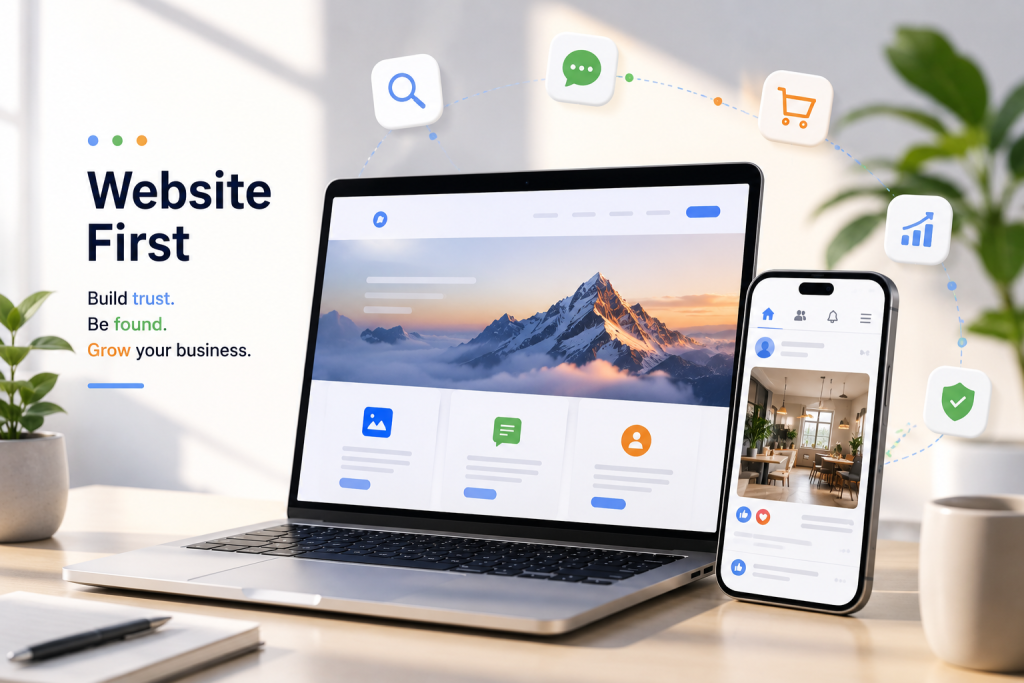
Social media helps people find you. A website helps them trust you.
Social media is great for sharing updates, engaging with customers, and reaching new audiences. However, everything you publish exists on platforms you don’t control. Algorithms change, organic reach fluctuates, and accounts can be restricted or even lost without warning.
Your website is your business’s own digital home.
It’s where you can clearly present your services, pricing, portfolio, company story, and contact information. When customers receive a professional website link instead of just a Facebook page or scattered posts, they’re far more likely to see your business as credible and trustworthy.
Be found when customers are actively searching
Not everyone happens to be scrolling through social media when you publish a new post.
When people need a web designer, a local service, a consultant, or a specific product, many of them head straight to Google. A website gives your business the opportunity to appear exactly when potential customers are actively looking for a solution.
You don’t need advanced technical knowledge to benefit from this. A website with clear service pages, easy-to-read content, and complete contact information already makes it much easier for customers to find you.
Over time, every helpful article you publish can continue attracting new visitors without relying on paid advertising.
Answer common questions before customers ask
Small business owners often answer the same questions repeatedly:
- How much does it cost?
- What packages do you offer?
- How long does the project take?
- What’s your process?
- Do you provide support or warranty?
A well-organized website answers many of these questions before customers even contact you.
Your service pages explain what you offer.
Your About page introduces your experience and what makes your business different.
Your FAQ page reduces repetitive enquiries.
Your contact form helps customers send complete project details from the beginning.
As a result, conversations become more productive because customers already understand the basics and are ready to discuss their real needs.
Don’t build your business on a single platform
Running your entire business on one platform is like opening only one shop on one street. If that street becomes inaccessible, customers may struggle to find you.
Social media should remain an important marketing channel, but your website should be the central destination that everything points to.
You can share your website across Facebook, Instagram, Google Business Profile, email signatures, business cards, and advertisements. When information changes, you update it once instead of editing countless old posts.
This becomes especially valuable as your business grows, expands its services, or updates its pricing.
Start simple—it doesn’t have to be perfect
A successful website doesn’t need dozens of pages from day one.
For most small businesses, a simple website with the essentials is more than enough:
- Home
- About
- Services or Products
- Portfolio
- Contact
- A few helpful articles
What matters most is having clear, useful content that shows customers exactly how you can help them.
Final thoughts
Social media helps people discover your business.
A website helps turn that attention into trust—and trust into customers.
If you’re serious about growing your business, investing in your own website is a small step that can create long-term value.